
Shop TODAY Savings: Exclusive Deals on Altra Sneakers, Lancome, More
TODAY
Start TODAY
Steals & Deals, Boxes & Last Chance Market
Caroline Kee
Health reporter
If you’ve ever felt numbness or soreness in your backside after sitting down all day, you may be suffering from “dead butt syndrome.”
Also known as gluteal amnesia or lower cross syndrome, it’s a real condition that can result from a sedentary lifestyle.
Prolonged sitting, whether it’s at a desk, in the car or on the couch, can cause these glute muscles to weaken and the hips to become tight, says Brianna Steinhilber, certified personal trainer and TODAY.com health editor. This can cause pain, discomfort and limited mobility down the line.
“The good news is you can reverse or prevent dead butt syndrome by following this simple two-step formula,” she says.
If you sit for long periods, the formula you should follow to combat dead butt syndrome is to do regular hip flexor stretches plus exercises that engage the glutes.
“When you sit all day, your hip flexors get short and tight, while your glutes get stretched out and weak. So, the antidote is to stretch and loosen those hip muscles while also activating and strengthening the glutes,” says Steinhilber.
The sitting position, with the knees and hips flexed and glutes stretched, is not ideal for a few reasons.
First, it allows our glutes to “turn off,” Steinhilber says.
The glutes are made up of three muscles: the gluteus maximus, gluteus medius and gluteus minimus. These help to stabilize the lower body, control movement and maintain posture.
“Sitting all day specifically weakens the gluteus medius, which is important in supporting the body and stabilizing the pelvis during weight-bearing movements like walking or running,” says Steinhilber.
Dead butt syndrome can continue to impact the body once we’re back up and moving. “Your glute muscles won’t activate properly when you exercise and move throughout the day,” she adds.
Weak glutes also cause instability in the lower body. “When the pelvis is unstable, it can put more stress on the knees and low back, so having weak glutes often causes pain and discomfort in other areas of the body,” Steinhilber explains.
Prolonged sitting also tightens up the hip flexors, which can cause stiffness and pain in the hips or lower back.
“Even if you’re an active person or work out regularly, you are still at risk if you spend large amounts of time sitting during the day,” says Steinhilber.
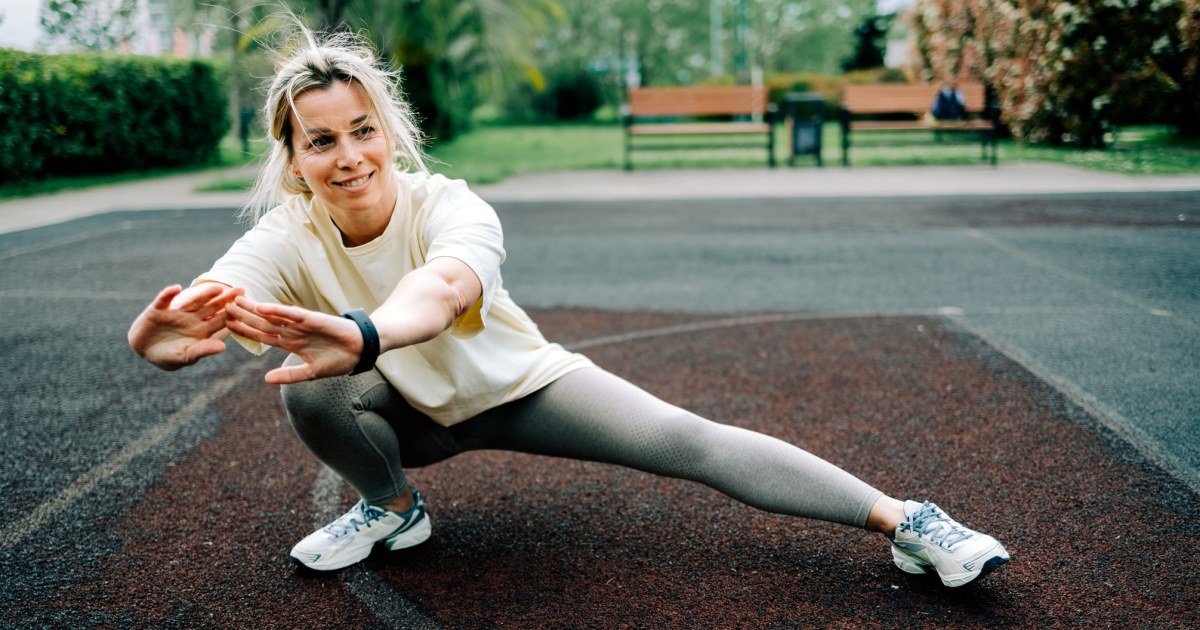
If you spend a lot of time sitting, here are some targeted exercises to combat dead butt syndrome.
Start by picking one hip flexor stretch and one glute strength exercise from the lists below.
“Get up once every hour or so to perform them back to back (a 30-second hold of the stretch and 10-12 reps of the strength exercise). This will loosen the hips and activate the glutes throughout the day,” Steinhilber says.
You can also string these together into a longer hip-stretch routine that can be performed daily, Steinhilber explains.
Similar to the hip stretches, you can also string these together for a full glute workout.
Caroline Kee is a health reporter at TODAY based in New York City. She covers a range of medical news, consumer health, and wellness topics.
© 2026 NBCUniversal Media, LLCApple®, Apple logo® and App Store® are registered trademarks of Apple Inc.